Our Pipeline

Changing rare hematologic malignancy and rare disease treatment paradigms through the development of treatments designed to improve quality of life.

Clinical Programs

Acute promyelocytic leukemia (APL) is a rare, aggressive subtype of acute myeloid leukemia (AML) marked by an accumulation of abnormal white blood cells in the bone marrow. Standard treatment consists of oral all-trans retinoic acid (ATRA) plus IV arsenic trioxide (ATO), with patients achieving favorable response at rates of 80-90%. With ATO treatment only administered by IV infusion, patients must adhere to a rigid and demanding treatment schedule only available at specialized facilities.

Quetzal Therapeutics’ lead candidate, QTX-2101, targets APL with a first-in-class oral arsenic trioxide with potential to significantly reduce treatment burden and expand access to patients everywhere. Our Phase III clinical trial, QUATRO-APL (NCT07504458), was initiated in December 2025 and is currently recruiting participants at multiple clinical trial sites.

Find a trial site near you


  • APL
  • QTX-2101 + ATRA
  • Albert Einstein College of Medicine
  • City of Hope
  • Rosewell Park Comprehensive Cancer Center​
  • Stanford University
  • UT MD Anderson Cancer Center​
  • UVA Health

Lead Program

Rare Disease Oncology

QTX-2101

Oral therapy for Acute Promyelocytic Leukemia (APL)

Image used for graphical depiction only. Not to scale, final product may differ.

QTX-2101 is an oral capsule formulation of ATO designed for use in combination with oral ATRA for the treatment of APL. This novel approach to ATO delivery is designed to free patients from the burdens associated with receiving daily IV infusions at centralized treatment facilities, sometimes requiring up to 180 visits.

Pipeline

In addition to QTX-2101 and QTX-2102, we are actively pursuing clinical programs with the potential to reshape treatment strategies across oncology and rare disease.

QTX-2101

Oral therapy for Acute Promyelocytic Leukemia (APL)

  1. Candidate
  2. Preclinical
  3. Phase 1
  4. Phase 2
  5. Phase 3
  6. Approved

QTX-2102

Next-generation antifungal and antiparasitic therapy

  1. Candidate
  2. Preclinical
  3. Phase 1
  4. Phase 2
  5. Phase 3
  6. Approved
Learn more

Scientific Publications

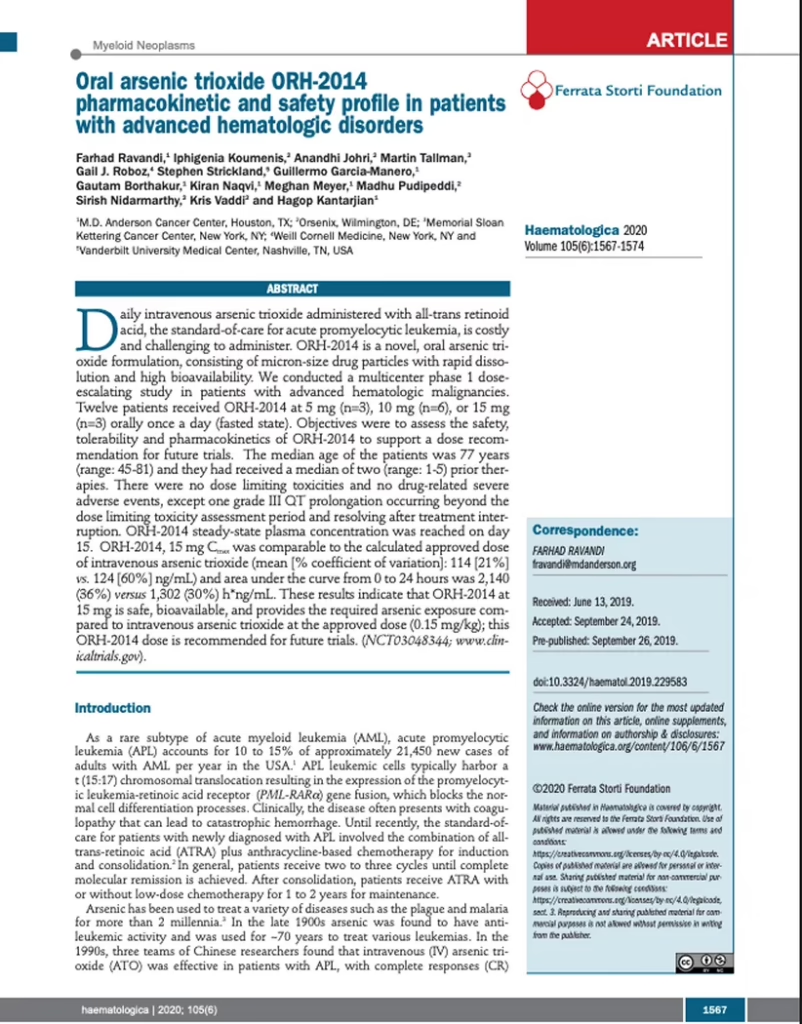
Oral arsenic trioxide ORH-2014 pharmakokinetic and safety profile in patients with advanced hematologic disorders (2020)
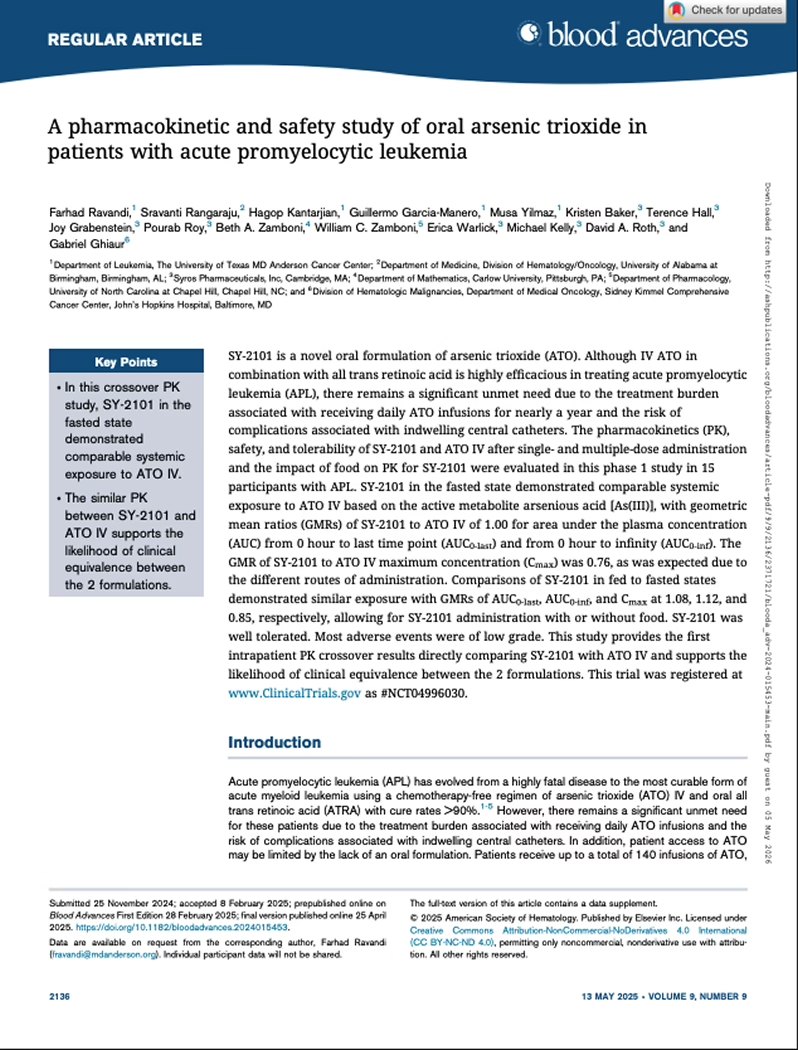
A pharmacokinetic and safety study of oral arsenic trioxide in patients with acute promyelocytic leukemia (2025)

Expanded Access Policy

Quetzal Therapeutics’ investigational therapy QTX-2101 is currently available only through participation in clinical trials.

Quetzal Therapeutics does not currently offer Expanded Access. If Expanded Access programs become available in the future, requests must be submitted by the patient’s treating physician and will be evaluated on a case-by-case basis.

For questions regarding potential future Expanded Access opportunities, please contact:
[email protected]

Quetzal Therapeutics: QTX-2101 Expanded Access Policy

Quetzal Therapeutics is a clinical-stage biotechnology company pioneering medicines for hematologic malignancies and rare diseases. Our mission is to deliver transformative therapies to patients as swiftly and safely as possible.
Currently, access to our investigational therapy, QTX-2101, is only available through participation in a clinical trial. We believe this is the most appropriate and scientifically rigorous way to evaluate safety and efficacy.

Quetzal Therapeutics does not currently offer Expanded Access. In the future, we may consider Expanded Access programs if appropriate and feasible. If such programs become available, requests must come directly from the patient’s treating physician and will be evaluated on a case-by-case basis.

How to Submit a Request
If you have questions or would like to inquire about potential future Expanded Access opportunities, please email:

[email protected]
Submission of an inquiry or request does not guarantee Expanded Access, if offered.

Questions about our clinical studies or therapeutic candidates?